Choosing a home EV charger starts with your daily routine. Where do you park? How often do you plug in? When is the car usually at home? Your answers will help you choose features you will use, rather than paying for ones you may never need.
You do not need to settle on a model before asking an electrician for advice. First, work through the decisions that affect how convenient the charger will be.
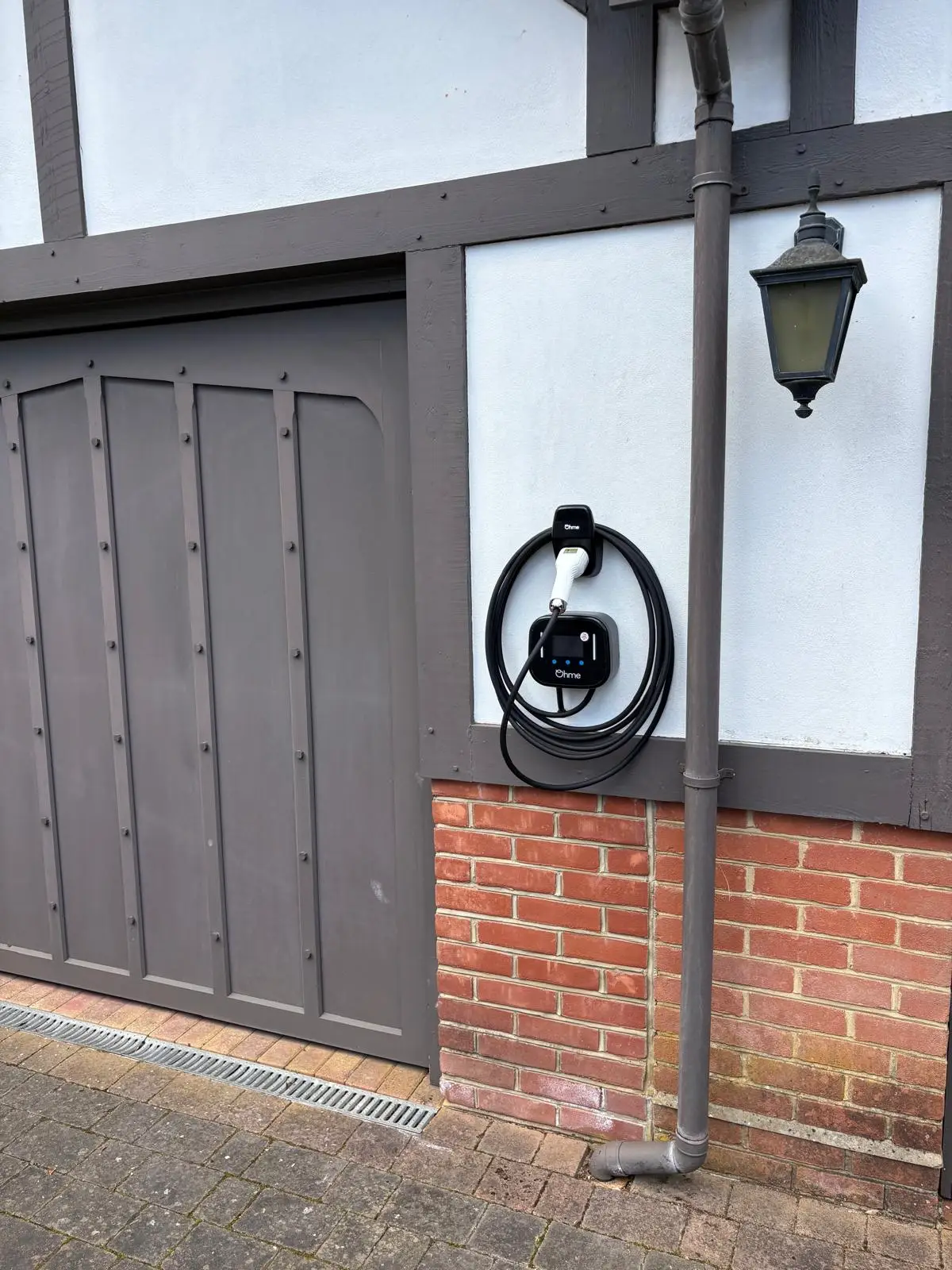
Think about when you charge
Consider how far you drive on a typical day and how much time the car spends parked at home. Someone who makes short local trips may only need to replace a small amount of charge each night. Someone who returns late from a long commute may have fewer hours to charge before leaving again.
Also think about when the car is parked at home during the day. If you have solar panels, that matters because the car needs to be plugged in while the panels are generating electricity to use it directly.
Check where the cable needs to reach
Look at where you normally park and find the charging port on your car. Then consider whether you always park in the same direction. A charger that reaches the car easily in one position may be awkward when another household member uses the space.
Measure the likely distance before choosing a cable length or charger position. Allow for a route around the car, rather than assuming the cable will run in a straight line. Keep paths and entrances clear when the car is plugged in.
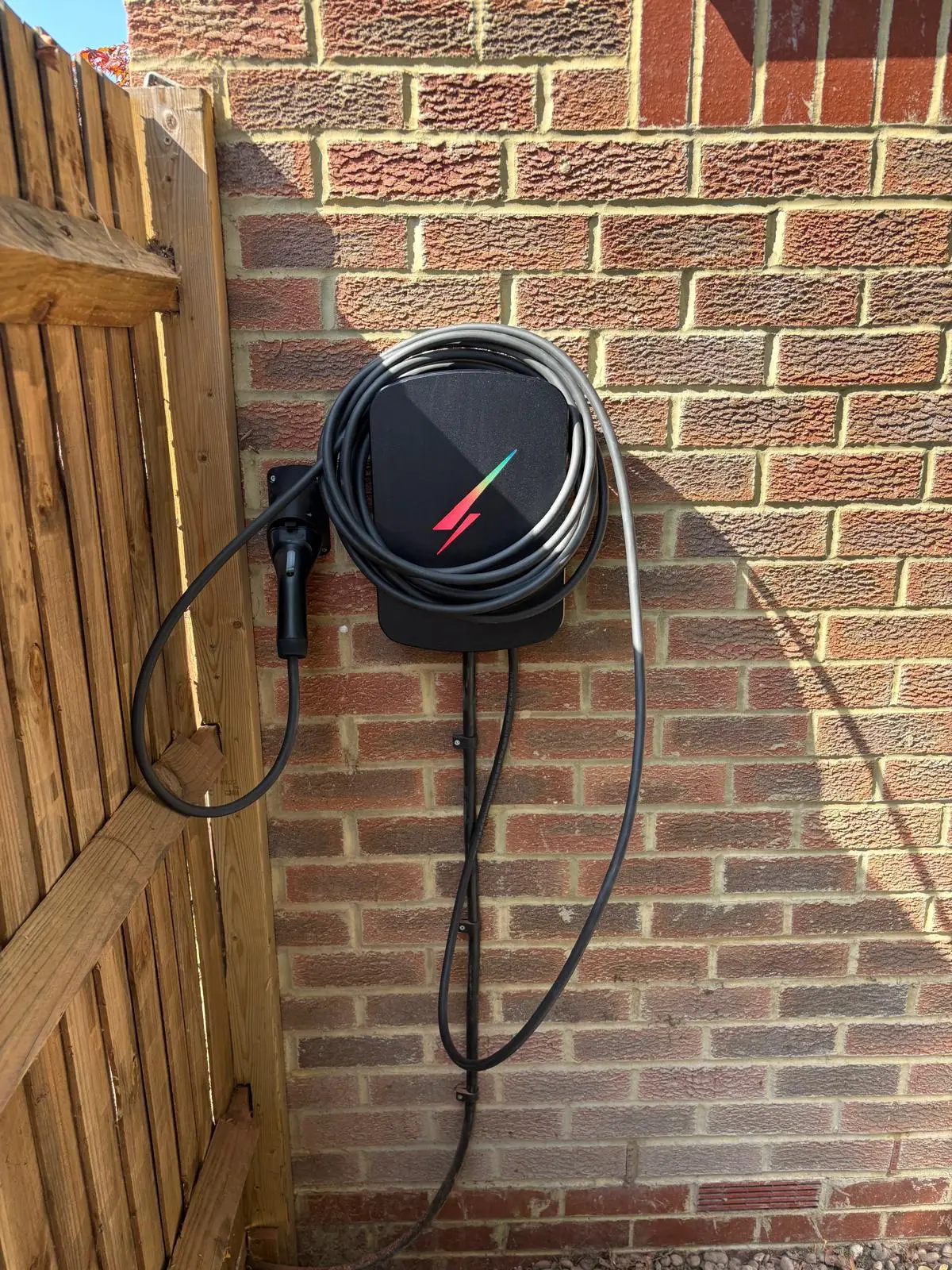
Decide whether you want an attached cable
A tethered charger has its cable attached. You take the connector from the charger and plug it into the car. This can be convenient if you charge most evenings.
An untethered charger has a socket, so you connect a separate cable each time. Some homeowners prefer the appearance of a charger without a cable hanging beside it. Consider where you would store the cable and how easy you would find it to handle in the rain.
Neither choice changes how much electricity your car can accept. It is mainly a decision about everyday use.
Check how the smart features work
Home chargers sold for private use in Great Britain must have smart functionality, including the ability to schedule charging. That does not mean every charger offers the same app or works with every energy tariff.
Source: GOV.UK, Regulations: electric vehicle smart charge pointsIf you have a particular tariff in mind, check its current requirements before buying a charger. Some tariffs depend on a compatible car, charger or combination of the two. Think about who in the household will use the app and whether you would prefer to set a regular charging schedule and leave it alone.
The charger also needs a suitable connection for its smart features. Wi-Fi may work well near the house but be weak at the end of a driveway. Other models use mobile data. Check the signal at the place where the charger would actually be fitted.
Be specific about solar charging
If you have solar panels, ask what you want the charger to do with the electricity they generate. Some compatible chargers can adjust charging to make use of spare solar power. Simply owning solar panels and a smart charger does not mean that feature will work automatically.
Your routine matters here too. If the car is usually away from home during daylight hours, you may use solar charging less often than you expect. If you work from home and the car sits on the drive during the day, it may be a more useful feature.
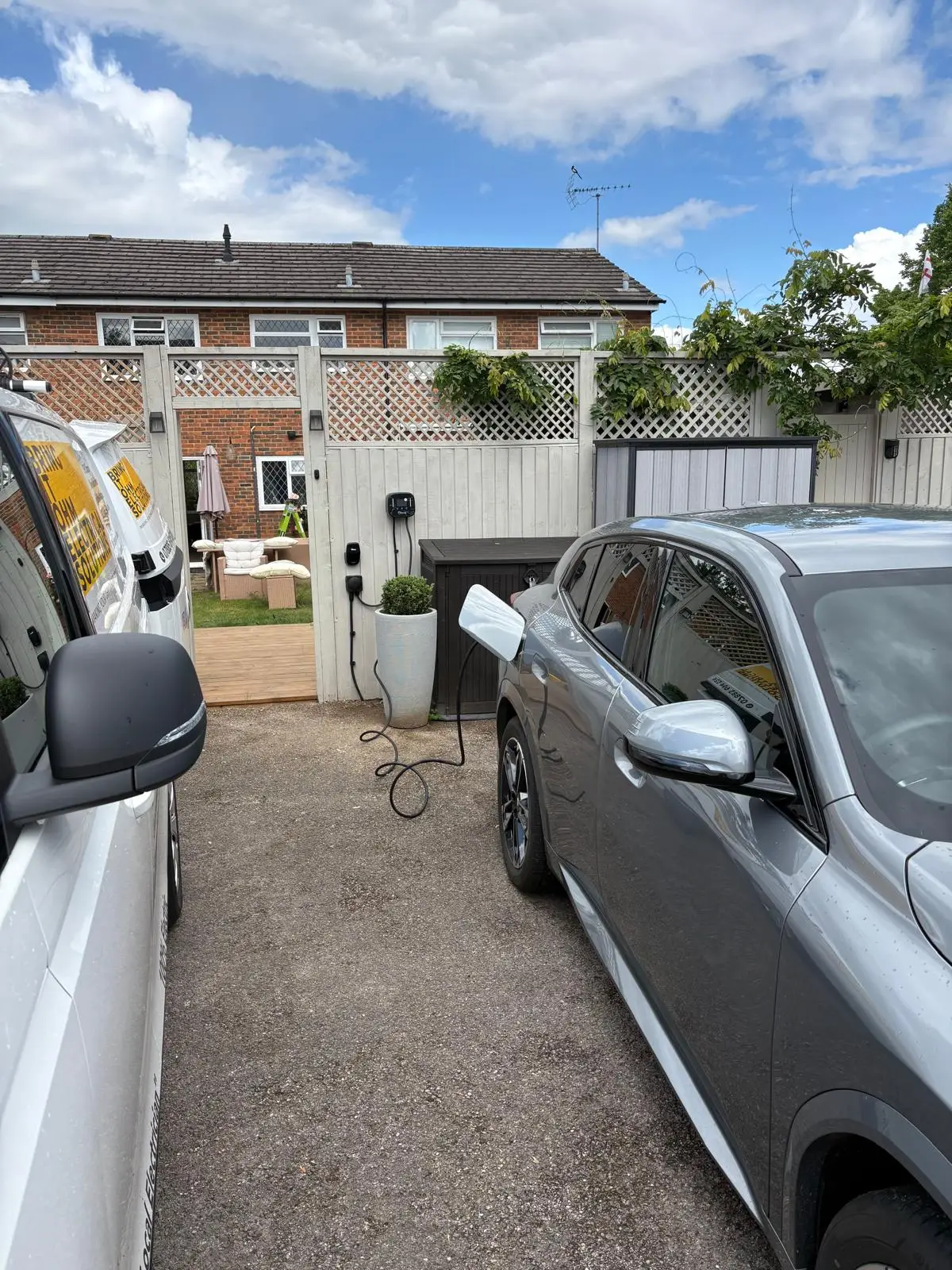
Make a short list before you buy
Write down your car model, where you park, your usual charging times and any tariff or solar setup you want to use. Decide whether you prefer an attached cable and note any plans to change your car or add a second one.
Help Choosing Your EV Charger
Share that list with your electrician. They can check it against your property’s electrical supply and recommend suitable chargers before you order one. Bring it Ohm Electrical Solutions can help you choose a charger and assess the installation, whether you would like Paul to supply the unit or have already found one you want to buy.