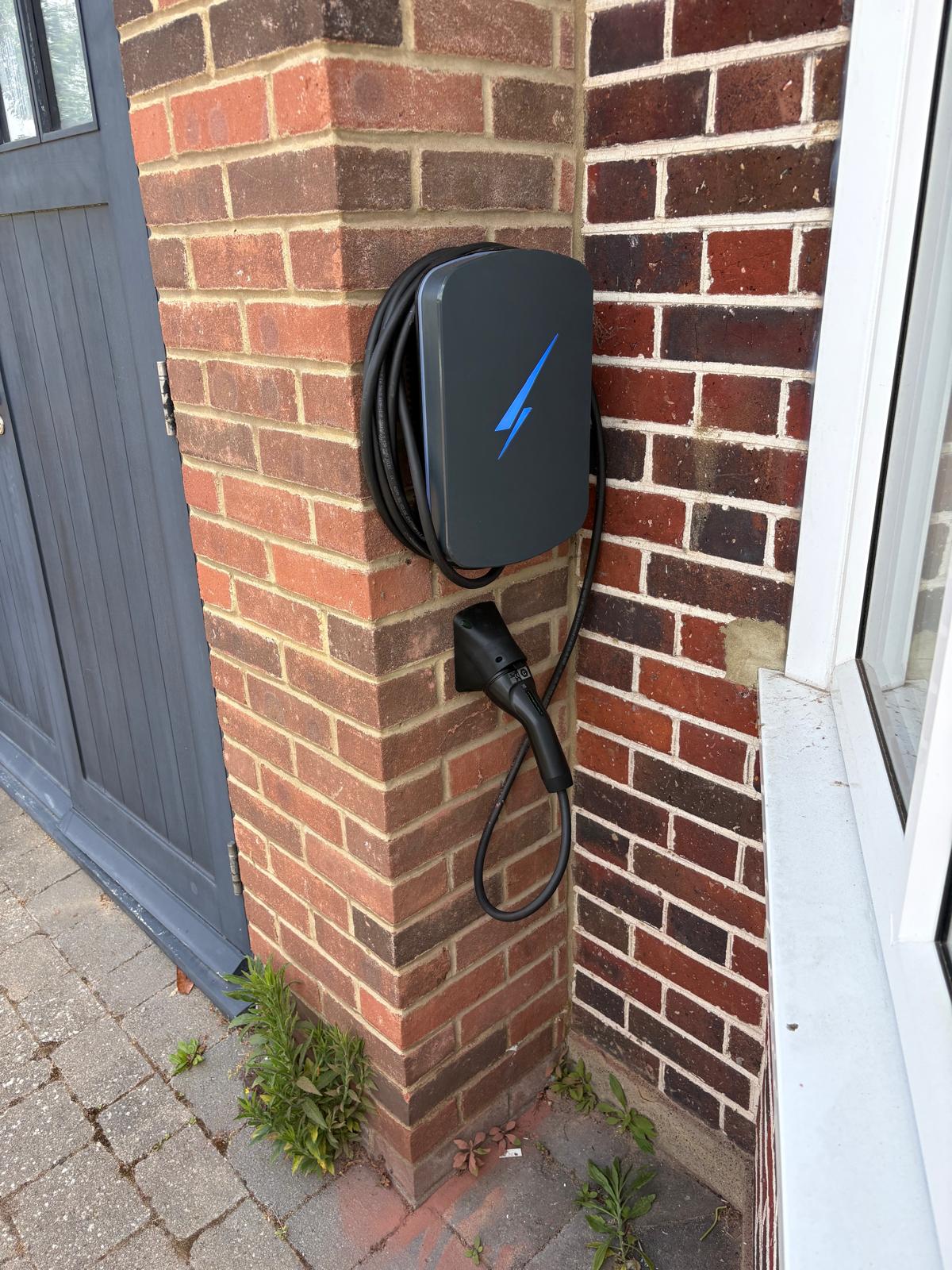
Yes, you can charge an electric car from a standard three pin plug, but it’s slow and puts a sustained load on a household socket for hours at a time. Paul, the Weybridge electrician behind Bring It Ohm, recommends using the three pin plug only for occasional top ups. For everyday charging across Weybridge, Walton-on-Thames, Addlestone, Hersham, Cobham and Byfleet, he recommends a dedicated home EV charger installation.
How fast does a three pin plug charge an electric car?
A three pin plug charges at about 2.3kW, which adds roughly 8 to 10 miles of range for every hour the car is plugged in. The cable that comes with most cars is often called a “granny cable”. It draws up to 10 amps, and many cars set it to 8 amps by default, which drops the rate to about 1.8kW.
At those speeds, a 60kWh battery takes more than 24 hours to charge from empty. A car doing a daily commute from Weybridge along the A3 or M25 may not get back overnight what it used during the day. That’s why so many drivers who start out on a three pin plug end up looking for something faster within a few months.
Why is regular three pin charging a safety risk?
Regular charging from a three pin plug is a risk because household sockets are built for appliances that draw heavy current for short periods. A kettle runs for three minutes. A granny cable draws 8 to 10 amps continuously for ten hours or more, night after night.
That sustained load builds heat at every weak point in the circuit, and worn contacts or loose connections are where it overheats first: a loose terminal, worn socket contacts, a cheap plug top or an old cable hidden in the wall. Over time the heat damages the socket and the wiring behind it and raises the risk of fire. Older properties are the biggest concern, especially where the circuits have no RCD protection or the wiring dates back several decades. The charity Electrical Safety First advises against using a standard 13 amp plug and socket for regular charging in its guide to electric vehicle safety.
Paul saw this first hand at a recent job in Walton-on-Thames. The homeowners had booked him to install an Ohme charger and didn’t mention any problems. When he arrived, he found that the socket they had been using to charge the car had melted. The owners hadn’t noticed the damage, which is common, because a socket can deteriorate behind the plug long before anything looks wrong from across the room.
Watch out for these warning signs:
- a faceplate that feels warm or has brown marks around the pins
- a plug that’s hot to touch when you unplug the car
- a burning or fishy smell near the socket
- a breaker or RCD that trips while the car is charging
If you notice any of these, stop charging from that socket and have it checked by an electrician.
What should you check before charging from a three pin plug?
Before using a three pin plug for regular charging, have an electrician check that the socket and circuit are suitable. RCD protection and a weatherproof cover alone don’t establish that a socket is suitable for charging an electric car. Electrical Safety First recommends a dedicated charge point, and says that a three pin socket installed for EV charging should be EV marked and on a dedicated circuit.
Always plug the cable straight into the wall socket. Never charge through an extension lead or cable reel. Car manufacturers warn against it, because coiled cable traps heat and extension sockets aren’t rated for hours of continuous load.
If you’re not sure what state your wiring is in, an Electrical Installation Condition Report (EICR) from Paul will show whether your circuits can safely take the load. It will also flag anything that needs putting right before you buy a charger.
How much faster is a dedicated home EV charger?
A 7kW home charger is about three times faster than a three pin plug, adding around 25 to 30 miles of range per hour. Most cars charge fully overnight in 8 to 9 hours. The charger runs on its own circuit from your consumer unit, with protection designed for EV charging, including the RCD and earthing arrangements that the wiring regulations (BS 7671) require.
Every new home charger sold in Great Britain must also include smart features under the Electric Vehicles (Smart Charge Points) Regulations 2021. That brings several practical benefits:
- Timed charging: you can set the car to charge during cheap overnight electricity tariffs, which can cut the cost per mile considerably.
- Load balancing: the charger slows down automatically when the shower, oven and heating are all running, so your main fuse isn’t overloaded.
- App control: you can start, stop and track charging from your phone.
- Solar integration: if you have solar panels, many chargers can send surplus daytime power straight into the car.
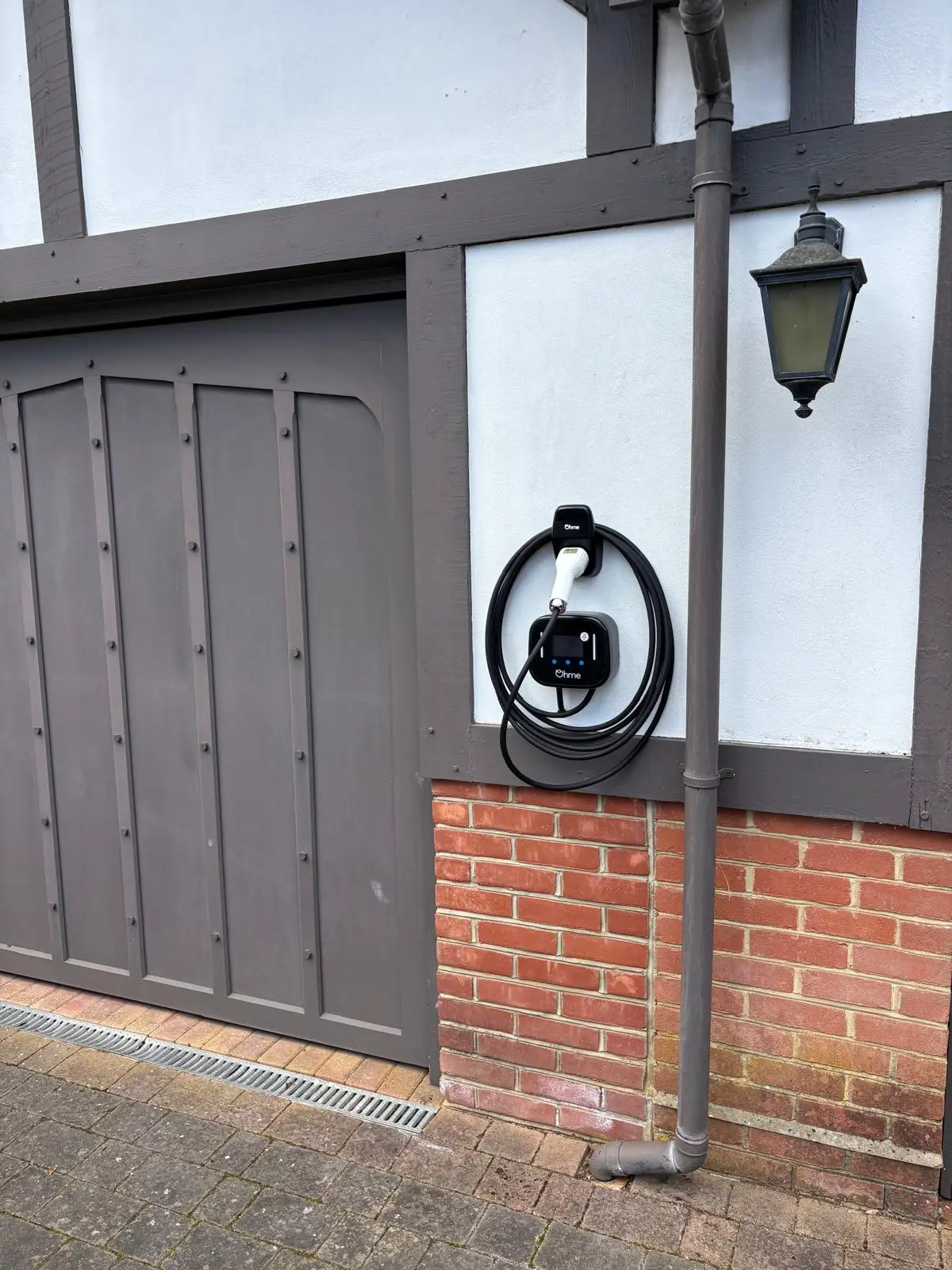
Paul installs chargers from Andersen, Tesla, Ohme, Pod Point, Easee, Hypervolt, Simpson & Partners and myenergi. During the survey he’ll recommend the one that best fits your car, your tariff, your budget and how the charger will look on your home. For example, an Andersen suits period properties where appearance matters, and a myenergi Zappi suits homes with solar panels. His guide on how to choose the right EV charger compares the options in more detail.
Is a portable EV charger a good middle ground?
A portable charger is safer than the basic cable that comes with the car, but it still relies on a domestic socket for regular charging. Better models include temperature sensors that cut the power if the plug overheats, which adds a useful layer of protection. They still charge at the same slow rate and still load the same socket.
Some portable units plug into a 16 amp or 32 amp commercial socket instead. That socket needs its own installed circuit, so most drivers find a fixed home charger makes more sense for the same installation work.
Do you need permission to install an EV charger at home?
Most homes in England don’t need planning permission for an EV charger, because a charger fixed to a house wall or mounted on a driveway counts as permitted development. The Planning Portal explains the conditions in its guide to permitted development for electric vehicle chargers. Listed buildings and some sites close to a road can need consent. Paul checks this during the survey, before any work starts.
The installation is notifiable electrical work under Part P of the Building Regulations. As a NAPIT registered electrician, Paul certifies the work and notifies building control, and you receive a certificate for your records. He also notifies your local electricity network operator, so the supply to your home is recorded as having a charger.
Can you get a grant towards a home EV charger?
Renters and people who own a flat can claim up to £500 per socket through the OZEV EV chargepoint grant. That amount has applied since 1 April 2026, and the scheme runs until 31 March 2027. Homeowners in houses with a driveway aren’t eligible and pay the full installation cost. You can check the current criteria on the GOV.UK page for electric vehicle chargepoint grants.
The grant requires an installer approved by OZEV and a charger from the approved product list. Paul is an OZEV approved installer, so he can fit grant eligible chargers and guide you through the application. Households that park on the street can apply through a separate OZEV grant. Paul fits Kerbo Charge channels, which carry the charging cable safely under the pavement surface to a car parked on the road. Your local council needs to approve the pavement work first.
What does an EV charger installation with Bring It Ohm involve?
An installation with Bring It Ohm starts with a survey of your consumer unit, earthing, supply capacity and the best cable route to where you park. Paul then confirms the charger position, the price and any upgrades your system needs. For example, some older consumer units need replacing before a charger can be added safely.
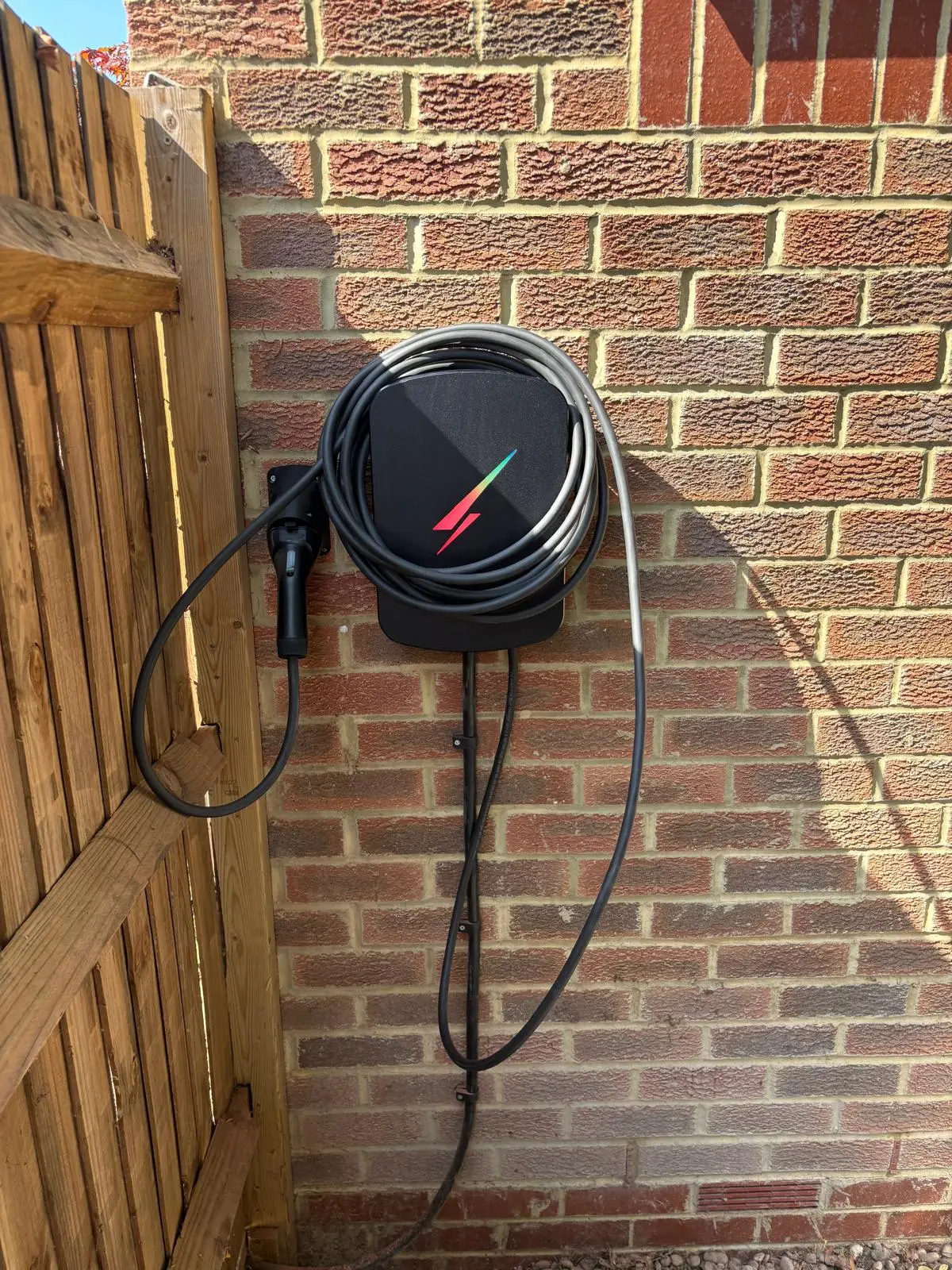
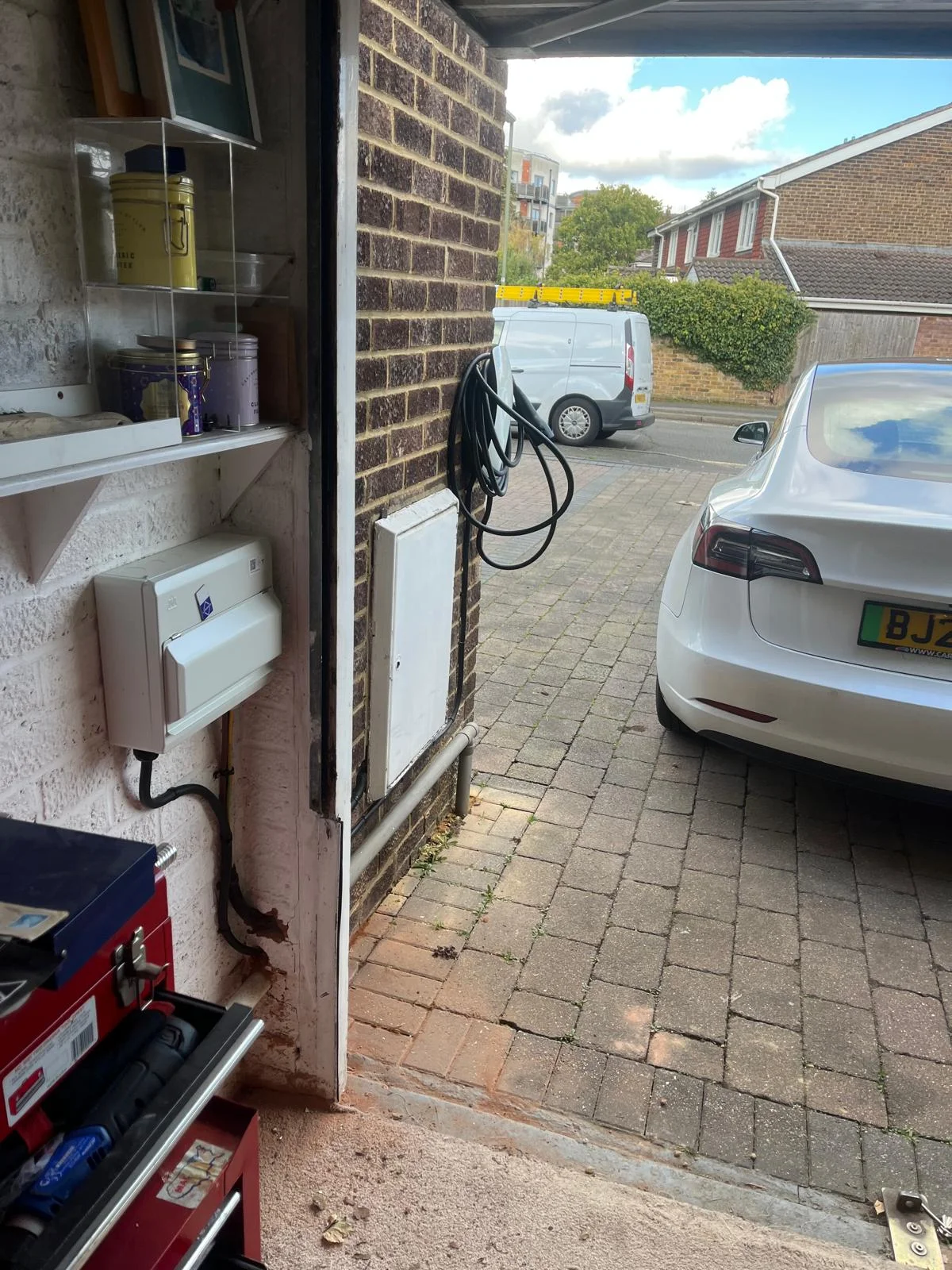
Most installations are completed in a single day. Paul fits the charger, runs the dedicated circuit, tests everything and sets up the app with you before he leaves. You receive your electrical certificate and building control notification once the work is complete. Prices start from £999, and you can see the full service on the EV charger installation page.
Paul also repairs chargers that have developed faults. His case study on an EV charger that stopped working shows how he traces the cause and gets a charger running again.
Frequently asked questions
How long does it take to charge an electric car from a three pin plug?
Charging from a three pin plug takes between 24 and 36 hours for a typical 60kWh battery from empty. Exact times depend on whether the cable draws 8 or 10 amps and how cold the weather is.
What happens if you charge an electric car through an extension lead?
Charging through an extension lead can overheat the lead, the plug and the wall socket, and it’s one of the most common causes of EV charging fires at home. Plug the car directly into a wall socket or, better still, use a dedicated charger.
How do you know if your wiring can handle an EV charger?
An electrician needs to check your consumer unit, earthing and incoming supply to confirm whether your wiring can take an EV charger. Paul does this during the survey, and an EICR gives you a full picture of the condition of the installation.
Where is the best place to fit a home EV charger?
The best place for a home charger is on an outside wall or post close to where you normally park, so the cable reaches the charging port without stretching across a path. Paul also considers the length of the cable run from your consumer unit, because a shorter run keeps costs down.
What does a home EV charger cost to install in Weybridge?
A home EV charger installation in Weybridge starts from £999, including the charger, the dedicated circuit, testing and certification. The final price depends on the charger you choose and the distance from your consumer unit.
Ready to Stop Charging From a Three Pin Plug?
Call Paul at Bring It Ohm in Weybridge to book a survey and a written quote for a faster, safer home EV charger.